Beyond Strategy: Why "Mental Steadiness" is a Career Superpower (Part 1)
1/3/20263 min read

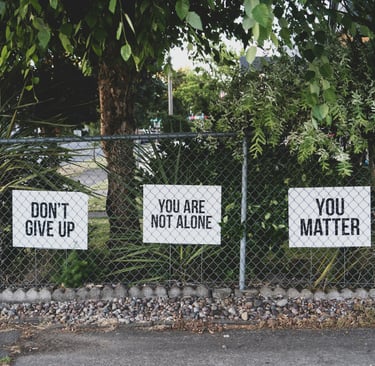
Today’s markets bring a reality that must be understood: careers paths can no longer be linear. Professional journeys are now defined by layoffs, role changes, stalled growth, and periods of radical uncertainty. Realities that have become normal features of professional life, not exceptions. For there to be a prosperous continuity of professional elevation, both employers and employees must align on this new reality. While we often prioritize career strategy, we tend to overlook the most critical, mostly underestimated, competency for the modern era: Mental Steadiness.
It isn’t about suppressing emotions or pretending uncertainty doesn’t exist. It is the capacity to remain grounded, clear-minded, and self-directed while the ground shifts beneath you. In a world where professional identities are constantly being challenged, steadiness becomes the foundation that allows you to make strategic, thoughtful decisions rather than reactive or desperate ones.
What Is Mental Steadiness in a Career Context?
It refers to your ability to:
Maintain self-worth independent of job titles or employment status
Regulate emotional responses during professional disruption or unplanned changes
Make decisions aligned with long-term direction, not short-term fear
Sustain momentum even when outcomes are delayed
It is not resilience alone. Resilience is about bouncing back. Mental steadiness is about remaining centered while moving forward.
For those who wonder how long it takes to develop this steadiness, the answer is simple but often uncomfortable: it evolves over time. Some professionals cultivate it more quickly because repeated career shifts have forced them to confront uncertainty, loss, and reinvention head-on. Others require more time. Not because they are less capable, but because they have not yet been taught how to interpret the feelings of disorientation, discouragement or perceived stagnation that accompany career change. Others will develop it through various challenges and unfairness in the workplace. Mental steadiness begins with understanding what those feelings are communicating. Before strategy, before clarity, and (sometimes) before confidence returns, there is a necessary phase of emotional awareness. When professionals learn to name what they are experiencing, rather than rushing to escape it, they gain access to better judgment, stronger self-trust, and more sustainable career decisions.
Why Mental Steadiness Matters More Than Ever
Professional instability has increased across sectors, corporate, nonprofit, academic, international, and entrepreneurial spaces alike. Even high-performing professionals now experience:
Unexpected layoffs
Lateral or downward career moves
Prolonged job searches
Career plateaus despite strong performance
Without mental steadiness, these experiences can lead to:
Loss of professional confidence
Decision paralysis
Burnout or disengagement
Over-identification with temporary setbacks
With mental steadiness, professionals are better able to interpret career disruptions as data, not personal failure.
Mental Steadiness Across Common Career Scenarios
1. During Layoffs or Job Loss
Layoffs often trigger a deep sense of personal rejection, even when they are structural or economic in nature. Mental steadiness during this phase requires separating identity from employment.
Professional experiencing such situations can practice the following:
Acknowledging the emotional impact without internalizing blame
Re-establishing daily structure to maintain psychological stability
Reframing the layoff as an interruption, not an erasure, of professional value
A layoff does not negate your experience. It simply changes the context in which it will next be applied.
2. During Job Changes
Job transitions, whether voluntary or necessary, often surface fear of the unknown. New environments challenge competence, belonging, and confidence simultaneously.
Professional experiencing such situations, mental steadiness involves:
Accepting temporary discomfort as part of growth
Allowing yourself to be a learner again without self-judgment
Anchoring confidence in transferable skills, not immediate mastery
Sometimes, a career move does not require certainty to be valid, it requires alignment and adaptability.
3. During Career Transitions
Career transitions, especially across sectors, are among the most psychologically demanding professional experiences. They often involve rejection, delayed validation, and questioning one’s direction.
Mental steadiness during transitions means:
Trusting cumulative experience, even when titles do not align
Maintaining patience when outcomes lag behind effort
Viewing rejection as feedback for improvement, not as final assessment
Non-linear careers are not a sign of confusion. They are evidence of strategic recalibration and a clear understanding of skill transferability.
4. When Staying in the Same Role for Too Long
Stagnation can be just as destabilizing as disruption. Remaining in a role without growth often erodes motivation and self-belief quietly.
Mental steadiness in this phase requires:
Honest assessment of what is missing (challenge, learning, impact)
Creating micro-goals to restore a sense of progress
Actively building skills and networks beyond the current role
Momentum does not always come from movement. Sometimes it comes from intentional preparation.
For you all, amazing professionals, wherever you are in the world:
Every career includes seasons of acceleration, pause, redirection, and recalibration. Mental steadiness will allow you to move through these seasons without abandoning yourself in the process.
If you are currently navigating uncertainty, remember this:
Your career is not defined by a single moment, title, or setback.
Your experience compounds, even when the path is non-linear.
It is not about standing still. It is about moving forward with clarity, intention, and self-trust.
Internal steadiness anchors continuity!
PS: If this first part resonates with your current career experience, the second part of this series explores practical ways to feel better and act stronger!
Grow, Develop, Prosper
Encouraging the growth of future international leaders, through prosperous non-linear career journeys!
Connect
© 2026. All rights reserved.